5 things worth knowing
1. Start with a cheap staples list
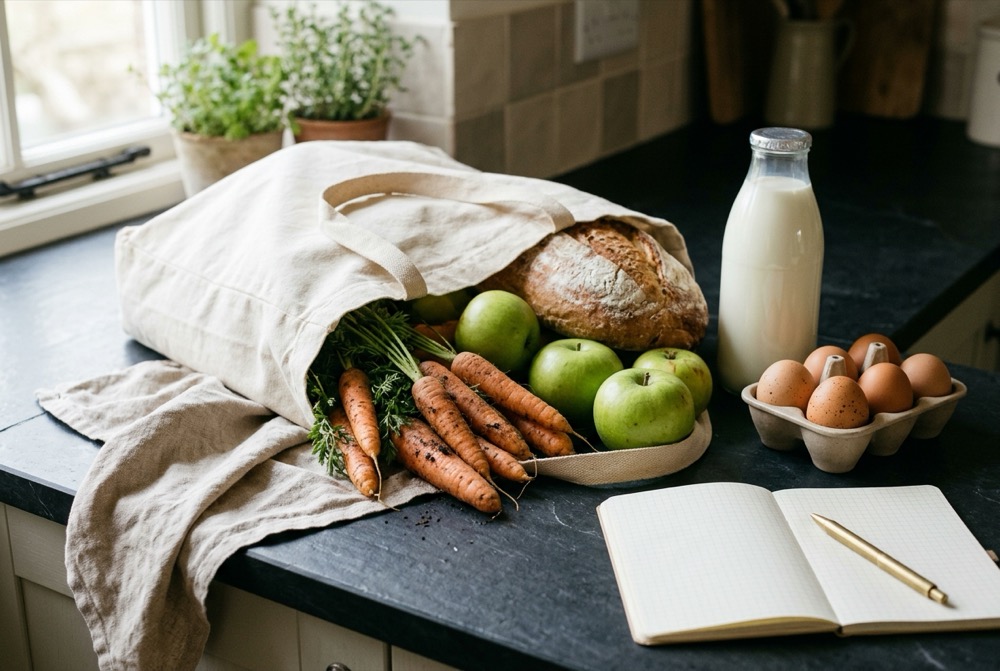
Before you plan meals, check what you already have. Then build a short list of staples that stretch: dried pasta, rice, oats, lentils, tinned tomatoes, tinned beans and chickpeas, eggs, potatoes, onions, carrots, frozen peas, frozen mixed veg, stock cubes and a big bag of cheddar you can grate.
Own-brand and value ranges are usually the cheapest way to buy these basics, and the difference is often hard to taste once they are cooked into a sauce. Frozen veg is ready chopped, does not go off in the fridge, and you can use just what you need.
Choose one cheaper meat, such as chicken thighs or mince, and stretch it with lentils, beans or grated veg. Or make two nights a week meat-free.
2. The 7-day dinner plan
Sunday: a big tray of roast chicken thighs with potatoes, carrots and onions. Roast extra potatoes and keep any leftover chicken. Monday: big-batch bolognese made with mince, lentils, tinned tomatoes and grated carrot. Eat half with pasta and cool the rest for later in the week or the freezer.
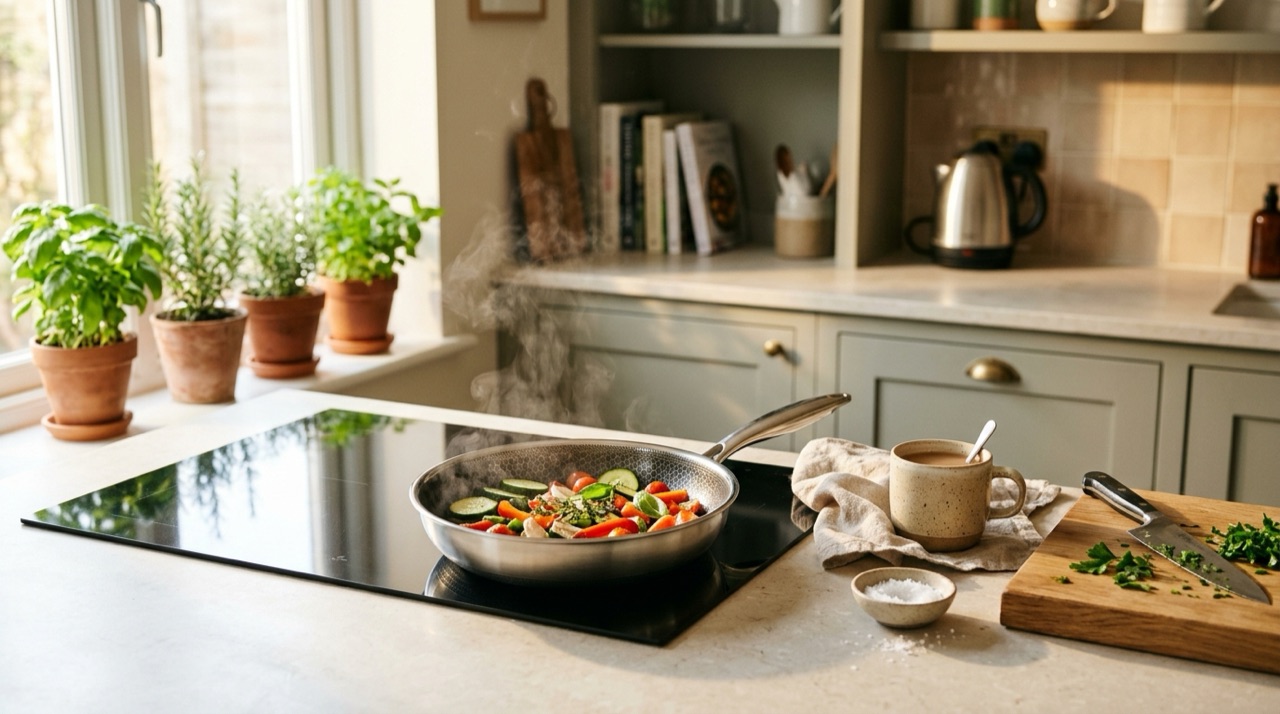
Tuesday: chicken and veg fried rice using leftover chicken from Sunday, frozen peas and a beaten egg, with freshly cooked rice. Wednesday: leftover bolognese turned into chilli with a tin of kidney beans and a little spice, served with jacket potatoes. Thursday: veggie bean and lentil soup with bread, or cheesy omelettes with frozen veg.
Friday: homemade pizza on wraps or flatbreads with tomato puree, cheese and any veg that needs using up. Saturday: big-batch vegetable curry or dhal with chickpeas, frozen spinach and tinned tomatoes, served with rice. Freeze half for next week.
3. Make batch cooking work for you
Pick two nights a week, such as Sunday and Monday, for bigger cooks. A double batch of a base sauce costs little more to make and gives you a second dinner or a frozen standby for a busy night.
Cool food quickly before you fridge or freeze it. Split it into smaller portions or shallow containers, and do not put hot food straight into the fridge. Label each tub with what it is and the date.
Plan a use-it-up night, like Friday's pizza, so odds and ends do not go in the bin. Check the fridge and freezer before you shop again, write your list around what needs using, and stick to it. Getting the kids to help choose the week's dinners from a short list of family favourites cuts down on waste and on arguments at teatime.
4. Leftovers and reheating: the food safety rules
The Food Standards Agency says to cool cooked food and get it in the fridge within one to two hours, and to eat leftovers within 48 hours. If you will not get to them in time, freeze them. Keep your fridge between 0C and 5C, and check it with a fridge thermometer.
Reheat leftovers only once, and heat them until they are steaming hot all the way through, not just warm. Stir halfway through in the microwave, because the middle can stay cold. For children, let the food cool down before serving and check the temperature.
Rice needs extra care. The NHS advises cooling cooked rice within 1 hour, eating it within 24 hours from the fridge, and never reheating it more than once. Do not save food your child has left on their plate.
5. Freezing and defrosting safely
Freeze leftovers as soon as they have cooled. Small, flat portions freeze and defrost faster, which is handy for after-school meals.
Defrost in the fridge overnight, or use the microwave defrost setting just before cooking. Once food has defrosted in the fridge, use it within 24 hours. If you defrost in the microwave, cook or eat it straight away.
You can freeze raw food, cook it, then freeze the cooked dish. But you should still only reheat that cooked dish once.
| Food | Store | Reheat | Link |
|---|---|---|---|
| Cooked leftovers | Fridge within 1 to 2 hours, eat within 48 hours | Once, until steaming hot throughout | FSA Cooking your food |
| Frozen then defrosted food | Defrost in the fridge and use within 24 hours | Once only | FSA Chill, freeze and defrost safely |
| Cooked rice and children's food | Cool rice within 1 hour, eat within 24 hours | Never more than once; cool before serving children | NHS Children's food safety and hygiene |