5 things worth knowing
1. What the school rules do and do not cover
In England, the school food standards set out what schools serve in school meals and other food they provide. They do not apply to packed lunches you send from home.
That does not mean anything goes. Many schools have their own packed lunch policy, often asking for no fizzy drinks, sweets or chocolate bars, and sometimes no nuts. Check the school website or ask the office, and follow it so your child is not singled out.
Wales, Scotland and Northern Ireland have their own school food rules, but the same principle applies: home packed lunches are guided by the school's policy rather than the law. If your child is eligible for free school meals, it is worth comparing before you pack every day.
2. A balanced lunchbox in five parts
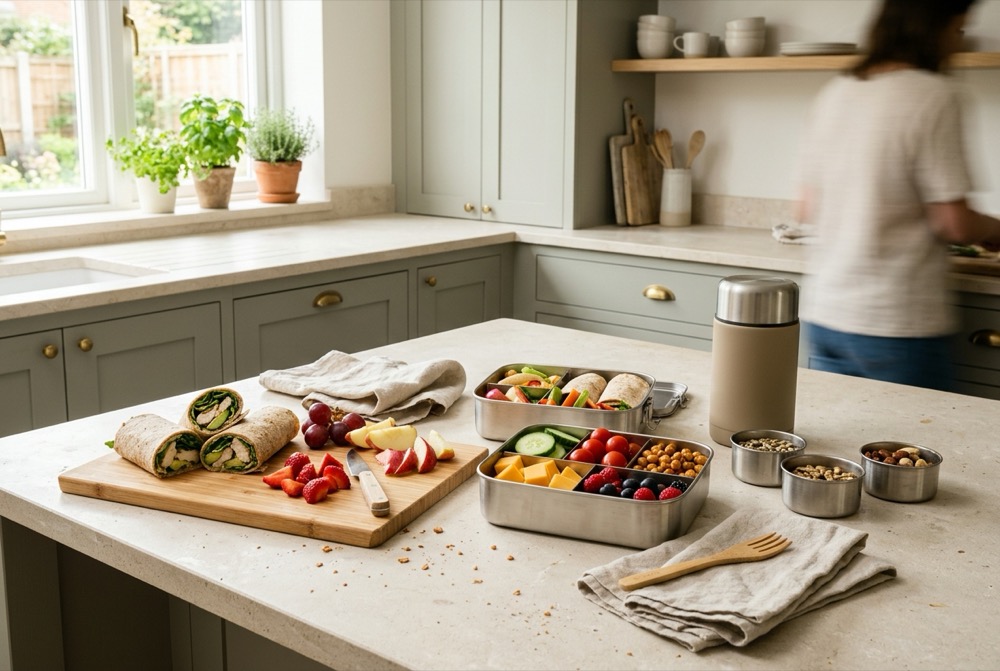
The NHS Healthier Families advice is simple. Start with a starchy base such as bread, a wrap, pasta, rice, couscous or potatoes, choosing wholegrain where you can, as it keeps children fuller for longer.
Add a protein filling. Lean meats such as chicken or turkey, fish such as tuna or salmon, eggs, beans, hummus, or reduced-fat cheese all work. The NHS suggests lower-fat spreads and going easy on mayonnaise. Then add at least one portion of fruit and one of veg, such as cucumber, pepper or carrot sticks, apple slices, satsuma segments or a pot of tinned fruit in juice.
Finish with a dairy option such as a low-fat, lower-sugar yoghurt or fromage frais with fruit added at home, and a drink of water or milk. Rotating two or three combinations a week keeps it interesting without extra effort.
3. Keeping food cool and safe until lunchtime
A lunchbox can sit in a warm classroom or cloakroom for hours. The Food Standards Agency calls 8C to 63C the danger zone, where bacteria can grow. Your fridge should be between 0 and 5C, so pack chilled foods straight from it.
Use an insulated lunch bag with an ice pack, or a frozen bottle of water that will have thawed by lunch. Fillings such as meat, fish, egg, soft cheese and cooked rice or pasta need the most care. Cook rice or pasta the night before, cool it quickly, and keep it in the fridge until the morning.
Wash reusable boxes in hot soapy water every day and let them dry fully. Throw away any leftovers that come home in the afternoon rather than reusing them the next day.
4. Allergies, nut policies and choking risks
Many schools have nut-free or allergy-aware rules because a classmate has a severe allergy. Check labels on spreads, cereal bars and snacks, as nuts turn up in unexpected places. If in doubt, leave it out.
If your own child has an allergy, tell the school in writing, share any allergy action plan from your doctor, and make sure staff know about any adrenaline auto-injector. Teach your child not to swap food.
For younger children, cut small round foods such as grapes, cherry tomatoes, cherries and strawberries lengthways and then in half again, so each is in quarters. Cut larger fruit and veg into sticks or slices. The NHS advises not giving whole nuts to children under 5. If a child is choking and cannot breathe, cough or speak, call 999.
5. Quick wins for busy mornings
Pack non-perishables such as fruit pots, crackers and water bottles the night before, and add fridge items in the morning. Keep a list on the fridge of the combinations your child actually eats.
Let children choose between two options or help pack their own. They are more likely to eat what they picked. If lunches keep coming home uneaten, try smaller portions or finger foods, and have a quiet chat with the class teacher about how long they get to eat.
| Topic | Key point | Who says so | Link |
|---|---|---|---|
| What to put in | Starchy base, wholegrain where you can, lower-fat fillings, fruit and veg | NHS Healthier Families | NHS lunchbox ideas and recipes |
| Keeping food cold | Fridge at 0 to 5C; danger zone is 8C to 63C | Food Standards Agency | FSA chill, freeze and defrost safely |
| School rules | Standards cover school food, not home packed lunches | Department for Education | GOV.UK school food standards |
| Choking risks | Quarter grapes and cherry tomatoes lengthways | Early years food choking hazards guidance | Early years food choking hazards table |